
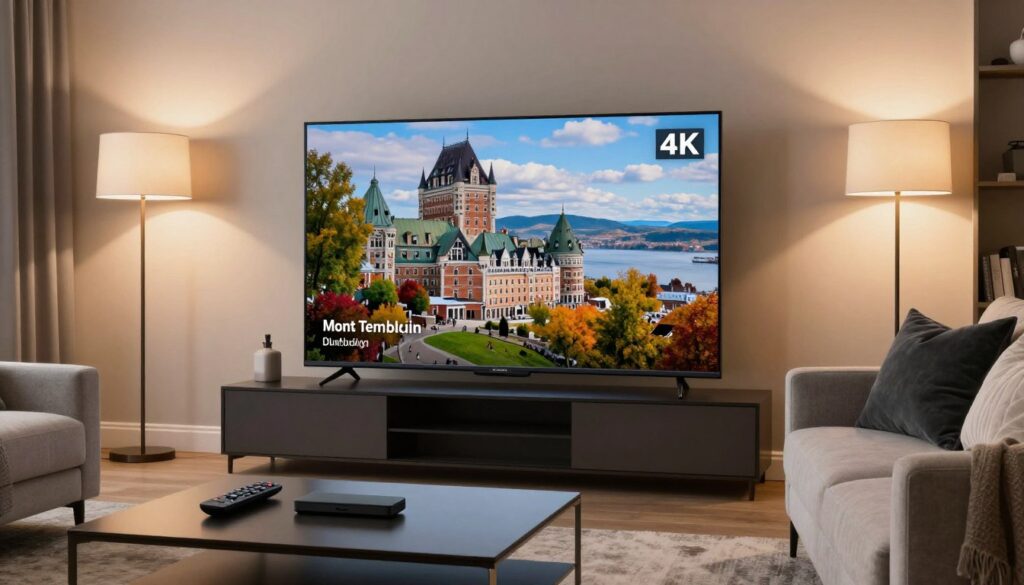
Curious which streaming setup will give you smooth live TV, sports, movies, and series at true 4K quality without the fluff?
Best IPTV 4K in Quebec in 2025 means clear standards, not hype. You’ll learn how providers compare on video quality, stability, channel and VOD libraries, device support, setup ease, and refund policies.
We use common market benchmarks — think 20,000+ live channels and 80,000+ VOD as reference points — and explain what those numbers mean for your home viewing.
This guide helps you pick the right abonnement and service by focusing on practical outcomes: how reliable playback is, which devices fit your needs, what guarantees to expect, and how to confirm legal, safe viewing.
Later you’ll see real comparisons and one option to consider is GetMaxTV, which we’ll evaluate against uptime, content depth, and clear terms before you pay.
Key Takeaways
- We compare providers by quality, stability, content, device fit, and transparent terms.
- Benchmarks like large channel and VOD libraries show range, not guaranteed daily experience.
- Check activation, refund windows (7–30 days), and support before you subscribe.
- Device compatibility and real uptime tests matter more than headline specs.
- Legal and safe viewing practices should guide your final abonnement choice.
What “IPTV 4K” means for viewers in Quebec
Think of IPTV 4K as ordinary television reimagined for any device that shares your home internet. In plain terms, it’s television delivered over your connexion instead of through a cable box or a satellite dish. That change affects how you access channels, pay for service, and move between screens.
IPTV vs cable or satellite: what changes for you
You get more flexibility across rooms and devices. Apps replace physical hardware, so channel browsing happens inside an interface on your TV, phone, or tablet.
This means easier multi-room viewing and on-demand access, but it also depends on your home network and router setup.
What true 4K/UHD streaming requires (and why it matters)
4K/UHD has more pixels than FHD, but the visible benefit depends on source quality and bitrate. A labelled 4K stream can still look poor if the provider uses low bitrate or a weak source.
To keep a sharp image you need a capable TV or device, a steady connexion, and enough provider bitrate. If multiple people stream at once, speeds must rise.
- For a legal, clear offer, check provider pages like Apollo Group TV or a secure streaming option such as GetMaxTV secure 4K.
- VPN claims matter less than a stable connexion; start with bandwidth and wiring checks.
Why people search for the best IPTV 4K in Quebec in 2025
You want fewer apps and more watching. Many viewers switch services to gather live chaînes and deep on-demand catalogs in a single interface. That reduces time spent jumping between apps and helps families find shows fast.
More channels and on-demand in one place
Consolidation matters. Providers that advertise large live channel counts (20,000+) and huge VOD libraries (80,000+) can help you skip app-hopping. What matters more is how content is organized.
Good search, tidy categories, and a clear EPG let you find films and séries without endless scrolling.
Watching on all your screens at home and on the go
You watch TV in the living room, stream on a tablet in the kitchen, and use your phone while commuting. Multi-device support means content works on tous appareils and keeps your place when you switch screens.
Sports, movies, and séries in higher picture quality
Higher resolution helps live sports, blockbuster films, and visually rich séries look their best. But steady bitrate and stability affect the experience more than a label alone.
“A strong provider should make it easy to find what you want, not just brag about big numbers.”
| Viewer need | What to check | Why it matters |
|---|---|---|
| Consolidated content | Organized VOD & chaînes | Less app-hopping, faster discovery |
| Multi-device access | Apps for TV, tablet, phone | Watch anywhere, resume playback |
| High-quality viewing | Stable streams, good bitrate | Better sports, films, and séries |
If you want a practical shortlist of offers to compare, see our guide to the best Canadian services. The right pick will balance stability, quality controls, device support, and clear subscription terms.
iptv 4k quebec: the key criteria to compare providers
Focus on the practical differences that shape your home streaming experience.
Picture quality options: Providers should list SD, HD, FHD, and 4K/UHD tiers so you can match qualité to your bandwidth and device. Choose a service that lets you switch tiers when needed.
Stream stability features: Marketing names like “Anti‑Freeze™” try to solve buffering and server load. Ask what it does, how it’s measured, and whether the fournisseur runs load-balanced servers. Claims alone don’t guarantee uptime.
Content depth: Look beyond raw counts. A large VOD library is useful only if it’s searchable and organized. Check live channel coverage, movie and series categories, and how quickly new releases appear.
“Pick a provider that makes access simple and shows clear terms before you pay.”
- EPG and categories: a true EPG gives a cable‑like guide. Well‑organized categories speed discovery for sports and daily channels.
- Transparency: verify start date (when credentials are sent), renewal policy (auto vs manual), and refund windows before checkout.
- Practical checklist: picture tiers, stability proof, searchable VOD, clear EPG, and plain terms.
| Criteria | What to check | Why it matters |
|---|---|---|
| Qualité tiers | SD / HD / FHD / 4K options | Match qualité image to speed and device |
| Stability | Anti‑Freeze tech details, server setup | Less buffering during peak hours |
| Content depth | Live channels + searchable VOD | Ease of finding shows and movies |
| Terms | Start date, renewal, refunds | Clear access rules and fewer surprises |
Use this framework to compare any service iptv and make a confident choix. For a deeper comparison, see our comprehensive guide before you decide.
Channel lineup and content libraries you should expect

Start by checking how a provider organizes its channels and movies — the raw totals rarely tell the full story. Large claims like 20,000+ live channels or 80,000+ VOD signal breadth across regions and niches. But totals don’t guarantee the channels you watch every day.
Scale benchmarks and what they mean
Numbers such as +26,800 live channels or +82,600 VOD reflect wide coverage. They often include many low‑use feeds from around the monde. Focus on whether lists show Canada, US, and international groups.
How to sanity‑check a lineup
- Look for clear category lists: Canada/Quebec, US, sports, kids, news, and language groups.
- Search for your favorite channels and test navigation speed.
- Check sample EPG screenshots and recent update notes.
VOD expectations and local relevance
A market benchmark of 80,000+ films and séries is common. “Updated daily” usually means small daily additions, not wholesale refreshes.
For Quebec households, verify French‑language options, Canadian networks, regional news, and local sports. A large library is only useful if the interface helps you find the right contenu quickly and streams reliably.
4K image quality and performance standards
High-resolution viewing needs both good gear and a steady connexion. A true cinema-like image happens when your TV is native 4K, the source stream uses a healthy bitrate, and the feed stays stable so the player doesn’t downgrade resolution mid-playback.
When 4K will look “cinema-like” on your TV
To see cinema-level image you need three things: a 4K-capable display, a high-quality source, and a stable connection that prevents constant drops in resolution. If any piece is weak, the picture will look flat or blocky.
Buffering vs bitrate: what affects image most
Buffering is a symptom: pauses or stutters when data can’t arrive fast enough. Bitrate is the fuel for detail and color depth. Both shape perceived qualité image — bitrate sets clarity, buffering breaks the experience.
“A steady, higher bitrate matters more for sharpness than a label alone.”
Practical speed and connection guidance
Providers often list 15 Mbps as a minimum starting point for stable streaming. For single 4K viewing that may be enough some fois, but households with several viewers or frequent événements sportifs peaks do better with 50 Mbps or more.
Ethernet vs Wi‑Fi: Wired Ethernet gives the most consistent performance. Wi‑Fi can work well, but interference, distance, and router placement cause drops. If you must use Wi‑Fi, place the router near the TV, avoid crowded 2.4 GHz channels, and use 5 GHz when possible.
Quick troubleshooting checklist
- Pause large downloads and background uploads before watching.
- Restart your router occasionally to clear slowdowns.
- Test with a wired connection to isolate Wi‑Fi issues.
- Check during off-peak times to confirm provider limits during big events.
| Issue | What it means | Simple fix |
|---|---|---|
| Resolution drops | Bitrate variances or auto-switching | Force higher quality setting or test wired |
| Buffering | Insufficient sustained bandwidth | Pause other devices; restart router |
| Nighttime lag | Peak-hour congestion or server load | Test during off-peak; consider higher-speed plan |
Reliability and uptime: how to judge a stable IPTV service
Look beyond bold uptime numbers and test how a service behaves during prime time. Clear claims like “99% uptime” or “availability guaranteed” are common. They only matter when backed by measurable terms, transparent status updates, or a real SLA.
What uptime percentages mean in practice
99% uptime sounds high, but it can allow hours of downtime per year. “100% availability” is usually marketing unless the fournisseur publishes compensation terms for outages.
How to test stability during peak times
Try a short trial or low-cost plan and watch during evening peaks and events. Stream a major match or a busy movie night. Test both on-demand and direct live channels to judge consistency.
Spotting overloaded servers before you buy
- Frequent buffering at the same moment each day.
- Channels that fail to load or drop from promised quality.
- Slow support response when you report a problème.
“Reliability is a user experience feature — if live sports don’t play smoothly, channel counts don’t matter.”
Device compatibility: watch IPTV on all your appliances
Make sure the gear you own and the app a provider supports work well together before you buy.
How compatibility works in practice: most providers give an M3U playlist or portal credentials you add to an app on your device. That credential set usually grants accès across supported appareils so you can log in on your TV, phone, or ordinateur.
Smart TVs and common apps
Check whether your Smart TV (Samsung, LG, Sony) supports the app you plan to use. Some Samsung models include native apps—see official Samsung app listings for details at Samsung TV apps.
Remote navigation and app design matter. If the native app is limited, a small streaming stick can improve the installation and interface.
Streaming sticks and boxes
Fire TV Stick and Android boxes give easier app installs and smoother playback on many sets. Dedicated boxes like MAG and Formuler often handle playlists and EPGs well.
Households pick these devices for reliability and simpler installation when the TV app is missing or clunky.
Mobile and desktop viewing
You can watch on iOS/Android phones and on Windows/Mac computers when the TV is in use or you travel. Check how many simultaneous streams are allowed so you don’t lose access when multiple appareils connect at once.
- Before you buy checklist: your device model, preferred app, and whether you need 4K output support end-to-end.
- Confirm permitted concurrent streams and basic connexion speed for smooth playback.
- Consider a small trial to test your chosen devices in real use; see a quick starter guide at the basics guide.
| Device type | What to check | Typical benefit |
|---|---|---|
| Smart TV (Samsung/LG/Sony) | Native app support, remote navigation | Simpler setup, fewer extra devices |
| Streaming stick / Android box | App store access, 4K output option | Smoother performance, easy updates |
| Phone / Tablet / Computer | Mobile app or browser portal, concurrent stream limits | Watch anywhere, handy when TV is busy |
Setup, installation, and activation: what the experience should look like
Getting started should be fast: payment, an email with credentials, and a quick app setup are the usual steps.
Typical delivery: After you complete paiement, expect an email that contains either an M3U link or portal credentials. That message will include basic installation steps and access (accès) details you need to sign in.
Step-by-step flow: pay, install, watch
1) Pay and check your inbox. 2) Open the email, copy the link or credentials. 3) Install the provider app on your Smart TV, stick, box, phone, or computer. 4) Paste the M3U or log into the portal and start watching.
How “instant activation” works in practice
Many services use automation to send credentials quickly. In most cases you get access within minutes, but sometimes delivery takes up to an hour. The start of your plan is often counted from the moment that email is sent, so note the date and time.
Save the setup email and your login details. Keep them for renewals, device changes, or troubleshooting.
“A good provider gives clear steps and live help if you get stuck.”
If you need guided help, look for a provider that offers prompt assistance from a support équipe. For a helpful starter guide, see our starter guide.
Support and assistance: what good customer service includes
When problems pop up, your provider’s response can shape the whole viewing night. You want clear, fast help that fixes the issue and explains what went wrong.
Why support matters: Even top services hit setup or network snags. Reliable support prevents long downtime and saves you time when you have a problème.
Availability benchmarks
7 jours a week teams offer scheduled help. 24/7 chat (often WhatsApp) gives instant replies but may use short messages. Look for response times and whether answers resolve your issue or only acknowledge it.
Guided installation you can expect
Good guided installation includes step-by-step device instructions, app names, screenshots, and a human to walk you through if needed. The équipe should confirm your device model and send follow-up notes.
How to get help fast
- Share device type and app name.
- Note whether you use Wi‑Fi or Ethernet.
- Say which channel or VOD item failed and any error text.
“A provider that documents fixes and treats you like real clients is a safer long-term choice.”
| Support model | Typical response | What to expect |
|---|---|---|
| 7 jours/week email & phone | Hours to respond | More detailed replies, scheduled callbacks |
| 24/7 chat (WhatsApp) | Minutes to reply | Quick fixes, shorter messages |
| Guided install session | Live walk-through | Screenshots, settings checks, confirmation |
For targeted help and regional assistance, see this assistance for French Canadians.
Pricing, payment, and plan structures in Quebec
Price pages can hide the true monthly cost unless you compare the total value and included services. Start by checking whether the listed prix includes taxes, setup, or device access.
One-time payments vs monthly plans: You’ll see prepaid terms, single-payment offers, and recurring abonnement plans billed by the mois. “No contract” usually means you can stop renewing, but the start date often counts from credential delivery.
How to compare cost fairly
Convert longer plans to a monthly equivalent to compare apples to apples. Confirm what’s included: device limits, VOD access, and any 4k stream tiers.
Common paiement methods
Most vendors accept carte de crédit/debit, PayPal, Interac e-transfer, and crypto. A secure, branded checkout and clear payment confirmation are signs of a reputable seller.
Watch for hidden fees and unclear add‑ons
- Check for extra frais for EPGs, premium sports, or multi-device access.
- Look for taxes, processing fees, and how renewals are handled.
- Start with a short plan if you’re testing quality and channel lineup.
| What to check | Why it matters | Quick action |
|---|---|---|
| Displayed prix | May exclude taxes or setup | View checkout total before paying |
| Paiement methods | Security and dispute options | Prefer card or PayPal with buyer protection |
| Fees & add-ons | Can double the monthly cost | Read terms and ask support before purchase |
Refunds, guarantees, and subscription policies to verify
Before you hit buy, check how refunds and renewals actually work — policies vary widely and can change your risk.
Market examples of satisfaction windows
Some vendors offer a short remboursement window of 7 jours. Others provide a 30-day satisfaction guarantee that gives you more time to judge picture and stability.
Why they differ: Digital access is delivered instantly, so some sellers limit refunds once credentials are sent. That’s why a 7-day policy is common, and some services state refunds are not possible after activation.
Renewal expectations: auto billing vs manual renewals
Check whether your abonnement renews automatically. Non-auto renewal means you renew manually and avoid surprise charges. Auto-billing is convenient but requires clear cancellation steps and a visible renewal date.
What to document for a refund or support request
Keep these items handy when you ask for remboursement:
- Order confirmation and payment receipt.
- Activation email timestamp (start date often equals when credentials were sent).
- Screenshots or short clips of errors, buffer events, or channel failures, with device/app noted.
“Transparent, written policies and a clear refund process are the best signs a service treats customers seriously.”
When you contact support for a remboursement, be specific. Tell them which channel or VOD failed, exact times (jours and heures), and the troubleshooting steps you tried. Ask for the timeframe for a response and whether partial refunds for unused mois are possible.
| Policy item | What to check | Typical outcome |
|---|---|---|
| Refund window | How many jours and start moment | 7 or 30 jours common; some no-refund after activation |
| Renewal type | Auto-billing vs manual renewal | Auto-bill needs clear cancel steps; manual avoids surprise charges |
| Eligibility rules | What counts as “service not working” | Provider may require logs, screenshots, and troubleshooting attempts |
| Partial periods | Refunds for unused mois or prorated credits | Varies—confirm before purchase |
Legal and safe viewing: how to choose IPTV responsibly in Canada
Choosing a safe streaming option starts with checking who stands behind the service and what promises they actually make.
Why transparency matters
Pick providers that publish a business name, contact details, and clear terms. That helps you know who to call if access drops or billing is unclear.
Why licensing and clear terms matter
Legitimate distribution rights mean a provider can offer stable channels and timely support. Vague claims or hidden ownership make long-term reliability and refunds harder to trust.
“Legal, transparent services give clients protection and better odds of working support during peak événements.”
Privacy basics and when a VPN may be suggested
A VPN encrypts your traffic and masks your IP. Some vendors mention a VPN as a privacy tool or as a way to reduce ISP throttling during big live events.
Use a VPN only if your provider explains why and how it helps. Always follow Canadian laws and the provider’s terms.
- Ask these questions before you buy: who runs the service, where support is based, and how renewals work.
- Check refund rules and activation timing.
- Prefer providers with clear IDs and visible customer support channels.
For a practical buying checklist and a trusted option to review, see our best subscription guide.
Why GetMaxTV is worth a look if you want a legal IPTV subscription
Start by scanning an offer page for verifiable details rather than marketing claims. A clear page saves time and reduces surprises after payment.
What to check on a provider’s offer page before you purchase
Quality tiers: Look for explicit options (HD, FHD, 4K) and notes about bitrate or caps.
Device compatibility: Confirm apps for your TV model, sticks, and mobile devices, plus simultaneous stream limits.
Activation & support: Verify how credentials are delivered, support hours, and documented setup steps.
Renewal and refunds: Read the written refund window and renewal rules before you pay.
How to match a plan to your devices, viewing habits, and budget
If you mainly watch live sports, prioritize stability and multiple streams. If you mostly use on‑demand libraries, focus on search and VOD access.
Choose a plan that fits your number of screens and whether you need top-quality output on a single main TV or across devices.
| Criteria | What to check | Quick tip |
|---|---|---|
| Streams | Concurrent stream limit | Match to household size |
| Support | Hours & response channels | Prefer documented steps |
| Refunds | Window and conditions | Keep activation timestamp |
Practical note: You can review the current plans and details on the official offer page at https://getmaxtv.com. Choose clarity over hype—if the page answers your questions, you’re less likely to be surprised later.
Conclusion
Your best choice balances steady playback, clear terms, and device compatibility.
Keep the marketing numbers as context, not the deciding factor. Verify the channel categories you actually watch, test a films and séries search, and confirm that live direct streams hold up during prime-time events.
Check how activation is delivered (usually an email with credentials), the installation steps, and whether support responds quickly. Aim for at least 15 Mbps per single high-resolution stream and prefer Ethernet for your main TV when possible.
Review pricing as a monthly equivalent, note accepted payment methods, and watch for add-on fees or unclear renewal rules. Favor providers who list who they are and publish written policies.
If you want a legal IPTV subscription, check GetMaxTV’s current offer on https://getmaxtv.com.
FAQ
What does “IPTV 4K” mean for viewers in Quebec?
It means access to live channels and on-demand films and series streamed over the internet in ultra-high definition. For you, this can translate into sharper image detail, improved color, and a more cinematic feel on compatible TVs when your home connection and device support true UHD streams.
How does streaming compare to cable or satellite for my home?
Streaming gives you more flexibility: you can watch on multiple devices, pause or catch up on demand content, and often choose from larger international libraries. You replace a fixed channel lineup and hardware rental with apps, links, or portal access that you control.
What do I need at home to actually see 4K picture quality?
You need a true 4K TV, a player or app that supports UHD, and a stable internet connection—providers commonly recommend at least 15 Mbps per 4K stream. Use an Ethernet connection or a strong Wi‑Fi 5/6 link to reduce buffering and maximize bitrate.
What should I compare when choosing a provider in Quebec?
Look at picture quality tiers (SD to UHD), stream stability features, size of live and VOD libraries, an accurate electronic program guide, and clear terms on start dates and renewals. Also check device compatibility and support hours.
How many channels and movies should I expect?
Top services often advertise tens of thousands of live channels and large VOD catalogs. Focus on the mix that matters to you—local Quebec channels, Canadian content, sports, and the movie/series titles you watch most.
What affects image quality more: buffering or bitrate?
Bitrate drives detail and color fidelity, while buffering causes interruptions. A steady high bitrate with minimal packet loss yields the best picture, but if your connection can’t sustain it you’ll see buffering or automatic downscaling.
Is wired or wireless better for reliable streaming?
Ethernet is more consistent and reduces dropouts, especially for UHD streams and live sports. High-quality Wi‑Fi can work well, but place your router near your player or use Wi‑Fi 6 for improved performance.
How do providers prove uptime and reliability?
Reputable services publish availability metrics like “99% uptime,” run load tests during peak hours, and show how they handle redundancy. You can also review user reports around big live events to see real-world performance.
Which devices are commonly supported?
Support typically covers Smart TVs (Samsung, LG, Sony), streaming sticks and boxes (Amazon Fire TV Stick, Android TV boxes, Formuler), plus mobile and desktop apps for Android, iOS, Windows, and macOS.
What does setup usually involve?
Most providers send an M3U link or portal credentials by email. The flow is generally: purchase, receive credentials, install the recommended app or add the link, then activate and watch. Some services offer guided installation if you need help.
How fast is “instant activation” in practice?
Instant activation often means credentials or a link are delivered within minutes after payment. Activation can still vary if manual checks or device verification are needed, so expect short delays on occasional orders.
What level of customer support should I expect?
Look for daily or 24/7 chat, clear contact options (email, phone), and guided installation help. Fast response times during outages or streaming problems are a good sign of a reliable support team.
How are plans and payments usually structured in Quebec?
You’ll find monthly subscriptions, short-term trials, and sometimes one-time plan options. Common payment methods include credit card, PayPal, Interac e-transfer, and crypto. Check for hidden fees and clear billing terms before you pay.
What refund and guarantee policies should I verify?
Verify any trial length and refund window—some providers offer 7- or 30-day satisfaction guarantees. Confirm renewal rules, whether billing is automatic, and what evidence you need to submit for a refund request.
Is streaming through these services legal and safe in Canada?
Choose providers that are transparent about licensing and content sources. Verify privacy practices and consider a VPN only if the provider advises it for privacy; legal access depends on the provider’s rights to distribute content in Canada.
What should I check on a provider’s offer page before buying?
Check channel lists, VOD catalog size, device compatibility, picture quality tiers, trial or refund terms, supported payment methods, and customer support options. Match the plan to your devices and viewing habits to avoid surprises.
How can I tell if a service supports live sports and big events reliably?
Look for dedicated sports channels, fast channel switching, low-latency streaming claims, and positive user feedback during recent live events. Providers that invest in redundancy and peak-hour testing perform best for sports.
What are common troubleshooting steps if I have a connection or playback problem?
Restart your router and player, switch to Ethernet if possible, check for app updates, and test another device. If problems persist, contact support with details: device type, time of issue, and any error messages.
Are there extra fees or hidden costs I should watch for?
Watch for setup fees, device-specific charges, premium channel add-ons, and taxes. Read the fine print on the purchase page to ensure total monthly or one-time costs are clear before you commit.
The GetMaxTV Team is a group of cord-cutting experts and streaming technology specialists who have been testing and reviewing IPTV services since 2022. Based in North America, our team personally tests every service we recommend across 15+ devices including Fire TV Stick, Roku, Apple TV, Samsung Smart TVs, and gaming consoles. We verify channel counts, measure buffering rates, test picture quality in HD and 4K, and evaluate customer support response times. Our mission is to help viewers save money by switching from expensive cable subscriptions ($147/month average) to affordable, high-quality IPTV alternatives. Every article on GetMaxTV.com is based on hands-on testing and real-world experience — not recycled marketing claims.