The year 2026 marks a historic turning point for television viewing in America. Over 80.7 million households have already cut the cord, leaving behind traditional cable subscriptions. Only 54.3 million pay-TV subscribers remain, and that number continues to shrink every month.
Streaming now accounts for 47.5% of all television viewing. This represents a record high achieved in December 2025. Meanwhile, cable’s share has plummeted to just 20.2%, an all-time low that signals the end of an era.
The average cable bill now costs $147 per month. That adds up to $1,764 every year. Meanwhile, streaming services and modern alternatives offer the same content for a fraction of that cost. This complete guide walks you through every step of cutting the cord in 2026, from auditing your current bill to choosing the perfect replacement.
Why People Are Cutting the Cord in 2026
The cord cutting movement has accelerated dramatically over the past years. Three key factors drive this massive shift away from traditional cable subscriptions toward modern streaming alternatives.
Rising Cable Costs Push Subscribers Away
Cable companies continue raising prices year after year. The average monthly cable bill reached $147 in 2026. That represents a 23% increase compared to just two years ago.
Many people pay even more when you factor in equipment rental fees. Set-top boxes cost an additional $10 to $15 per month. HD service adds another $10. Premium sports packages can push bills over $200 monthly.
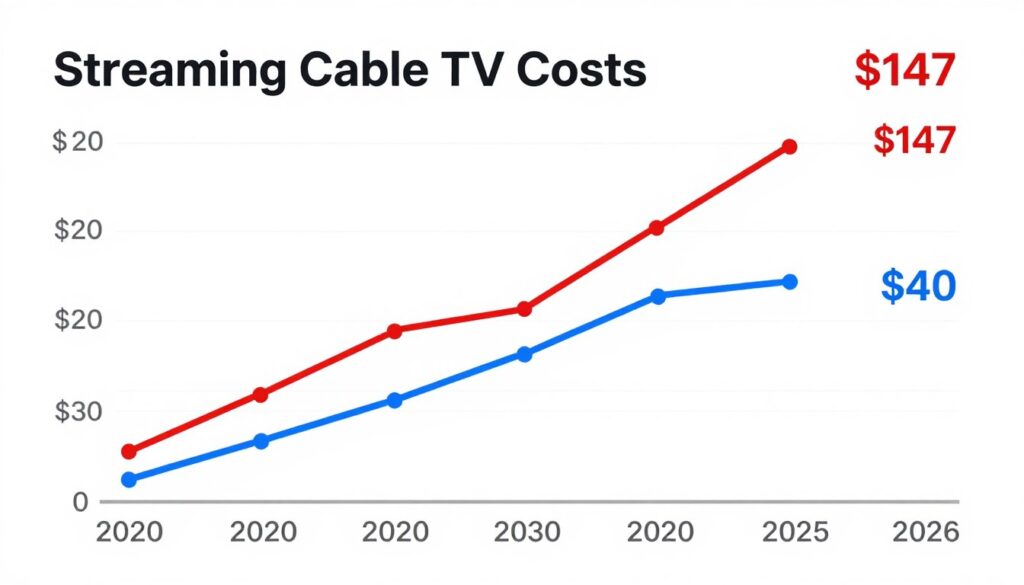
Cost represents the top reason people ditch cable. According to recent statistics, 86.7% of cord cutters cite high prices as their primary motivation for canceling their cable subscription.
Streaming Services Offer Better Value
Streaming platforms provide access to thousands of channels and shows. Services like YouTube TV, Hulu Live, and other alternatives cost significantly less than cable while delivering similar content.
The streaming industry has matured considerably. Most major networks now offer their content through streaming services. You can watch live sports, news, and entertainment without a cable subscription.
New IPTV services have entered the market offering even better value. These platforms provide access to over 21,000 channels for less than $7 per month. That includes everything from local channels to international programming.
Younger Generations Lead the Charge
Millennials and Gen Z viewers never developed cable habits. These younger generations grew up with Netflix, YouTube, and on-demand content. They expect flexibility and control over what they watch and when they watch it.
Currently, cable subscribers skew older. The average cable customer is now over 55 years old. As younger viewers establish households, they choose streaming from the start rather than signing up for traditional television services.
Industry experts predict 75% of all TV households will be cord-free by the end of 2026. This represents a complete reversal from a decade ago when cable dominated home entertainment.
Ready to Join 80.7 Million Cord-Cutters?
Try GetMaxTV risk-free for 24 hours. Access 21,000+ channels and 97,000+ on-demand titles for just $6.95/month. No credit card required for trial.
Step-by-Step Guide to Cutting the Cord
Cutting the cord requires planning and preparation. Follow these six steps to transition smoothly from cable to streaming without losing access to your favorite content.
Step 1: Audit Your Current Cable Bill
Start by examining exactly what you pay for cable each month. Pull out your most recent statement and identify every charge. Look for equipment fees, broadcast fees, regional sports fees, and other add-ons.
Average cable costs by major provider in 2026:
- Comcast Xfinity: $152/month (including fees)
- Spectrum: $145/month (including fees)
- Cox Communications: $148/month (including fees)
- Optimum: $143/month (including fees)
- Mediacom: $139/month (including fees)
Most households discover they pay for dozens of channels they never watch. Cable packages force you to buy bundles rather than choosing individual channels. This bundling strategy maximizes cable company revenue while wasting your money.
Step 2: List the Channels You Actually Watch
Track your viewing habits for two weeks. Write down every channel you watch and every show you record. Most people find they regularly watch only 10 to 15 channels despite paying for 150 or more.

Identify must-have content in these categories:
- Local broadcast channels (ABC, NBC, CBS, FOX)
- News channels (CNN, Fox News, MSNBC)
- Sports networks (ESPN, FS1, regional sports)
- Entertainment channels (HGTV, Food Network, TNT)
- Premium channels (HBO, Showtime, Starz)
This exercise reveals exactly what you need from a cable replacement. You can then choose streaming services or IPTV platforms that deliver those specific channels.
Step 3: Choose Your Streaming Device
You need hardware to access streaming services on your television. Modern streaming devices connect to your TV and provide access to all major streaming platforms.
Popular streaming device options and their costs:
| Device | Price Range | Best For |
| Amazon Fire TV Stick | $30 – $55 | Budget-friendly, Alexa integration |
| Roku Streaming Stick | $40 – $100 | User-friendly interface, most apps |
| Apple TV 4K | $129 – $149 | Apple ecosystem users, premium quality |
| Google Chromecast | $30 – $50 | Google services, phone casting |
| NVIDIA Shield | $149 – $199 | Gamers, power users, 4K streaming |
Many smart TVs come with streaming apps built in. Samsung, LG, Sony, and other manufacturers include platforms like Netflix, Amazon Prime, and YouTube directly in their television operating systems. If you bought your TV in the last three years, you may not need a separate device.
Step 4: Get an Antenna for Free Local Channels
Over-the-air antennas provide free access to local broadcast channels. These channels transmit in high definition, often with better picture quality than cable provides.
Indoor antennas cost between $15 and $50. They work well if you live within 30 miles of broadcast towers. Outdoor antennas range from $50 to $150 and capture signals from 60 miles or more away.
Local channels available through antenna typically include:
- ABC, NBC, CBS, and FOX affiliates
- PBS stations
- The CW network
- Independent local stations
- Foreign language broadcasters
Visit antenna web dot org to see which channels broadcast in your area. Enter your zip code to receive a coverage map showing tower locations and expected signal strength.
Step 5: Pick Your Streaming Services or Choose IPTV
Now comes the crucial decision. You can either subscribe to multiple streaming services or choose a comprehensive IPTV solution that provides everything in one place.
Traditional streaming service costs add up quickly:
- YouTube TV: $73 per month for 100+ channels
- Hulu + Live TV: $77 per month for 95+ channels
- FuboTV: $80 per month for 150+ channels
- Sling TV: $40 per month for 30+ channels
- Philo: $28 per month for 70+ channels
The IPTV alternative provides comprehensive access for significantly less money. GetMaxTV delivers 21,000+ live channels plus 97,000+ on-demand movies and shows for just $6.95 per month. That includes everything from local channels to premium entertainment, sports, news, and international programming.
Traditional Streaming Bundle
Typical setup combining services:
- YouTube TV: $73/month
- Netflix: $15.49/month
- Disney+: $13.99/month
- Amazon Prime: $14.99/month
Total: $117.47/month
IPTV Solution
All-inclusive service package:
- GetMaxTV: $6.95/month
- 21,000+ live channels
- 97,000+ VOD titles
- All content included
Total: $6.95/month
Step 6: Cancel Cable and Track Your Savings
Contact your cable company to cancel service. Be prepared for retention offers attempting to keep your business. Cable companies often offer temporary discounts or free premium channels.
These promotional rates always expire. The discounted price typically lasts three to six months before reverting to full cost. Calculate whether short-term savings justify staying with cable or if cutting the cord provides better long-term value.
Return all equipment to avoid final charges. Cable companies charge $100 or more for unreturned set-top boxes and remotes. Get a receipt confirming you returned everything to protect against surprise fees.
Track your annual savings after cutting the cord:
- Cable at $147/month = $1,764/year
- IPTV at $6.95/month = $83.40/year
- Annual savings = $1,680.60
Most households save between $1,000 and $1,500 annually by cutting the cord. That money can fund family vacations, emergency savings, or other financial goals instead of enriching cable companies.
Calculate Your Personal Savings
See exactly how much you’ll save by switching to GetMaxTV. Most households cut their TV costs by 95% while gaining access to more channels and content.
Streaming Service Comparison: Finding the Right Fit
Multiple streaming services compete for cord-cutters’ attention. Each platform offers different channels, features, and pricing. Understanding these differences helps you choose the best option for your household needs.
Cable TV vs IPTV: Understanding the Difference
Traditional cable TV delivers signals through coaxial cables. Cable companies control distribution and force customers into expensive bundles. You pay for hundreds of channels whether you watch them or not.
IPTV delivers content over internet connections. This technology provides more flexibility, better picture quality, and significantly lower costs. IPTV services use advanced compression and streaming technology to deliver thousands of channels without traditional broadcast limitations.
Traditional Cable TV
- Average cost: $147 per month
- Equipment rental fees: $10-$15/month
- Installation appointments required
- Limited to home viewing
- Bundled channel packages
- Contract requirements common
IPTV Services
- Average cost: $6.95 per month
- No equipment rental fees
- Instant activation and setup
- Watch anywhere with internet
- All channels included
- Month-to-month subscriptions
IPTV vs YouTube TV
YouTube TV launched as a cable replacement service. It provides access to over 100 channels including major networks, sports, and entertainment content. The service costs $73 per month as of 2026.
YouTube TV includes unlimited cloud DVR storage. You can record shows and watch them later without storage limits. The service supports up to three simultaneous streams per account.
GetMaxTV IPTV offers more comprehensive access at a fraction of the cost. While YouTube TV provides 100+ channels, GetMaxTV delivers 21,000+ channels covering every category imaginable. The price difference is substantial: $73 monthly versus $6.95 monthly.
| Feature | YouTube TV | GetMaxTV IPTV |
| Monthly Price | $73.00 | $6.95 |
| Live Channels | 100+ | 21,000+ |
| On-Demand Content | Limited | 97,000+ titles |
| Video Quality | 1080p | 4K available |
| Device Compatibility | Most devices | All major platforms |
| Free Trial | None | 24 hours |
| Money-Back Guarantee | None | 30 days |
IPTV vs Hulu Live TV
Hulu Live TV combines on-demand streaming with live television access. The service costs $77 per month and includes 95+ live channels plus the Hulu streaming library. Disney owns Hulu and bundles it with Disney+ and ESPN+ in some packages.
Hulu Live TV supports two simultaneous streams. Upgrading to unlimited screens costs an additional $10 monthly. Cloud DVR storage provides 50 hours of recording space, with unlimited storage available for an extra fee.
The platform works well for households heavily invested in Disney content. However, the price continues rising each year. Hulu raised rates three times between 2023 and 2026.
IPTV vs Sling TV
Sling TV positions itself as the budget streaming option. The service offers two base packages at $40 per month: Sling Orange and Sling Blue. Each package includes about 30 channels, though the channel lineups differ.
You can combine both packages for $55 monthly to access approximately 50 channels. Sling then charges extra for premium channels, sports add-ons, and expanded DVR storage. Many customers end up paying $70 or more after adding necessary extras.
Sling TV includes only 50 hours of DVR storage in the base package. The service limits simultaneous streams depending on which package you choose. These restrictions frustrate households with multiple viewers.
Complete Comparison Table: All Options
| Service | Monthly Cost | Channels | Best Feature | Biggest Drawback |
| Traditional Cable | $147 | 150-200 | Familiar technology | Very expensive |
| YouTube TV | $73 | 100+ | Unlimited DVR | Limited channels for price |
| Hulu Live TV | $77 | 95+ | Disney+ bundle option | Frequent price increases |
| FuboTV | $80 | 150+ | Sports coverage | Most expensive option |
| Sling TV | $40 | 30-50 | Lowest streaming price | Limited channels |
| GetMaxTV IPTV | $6.95 | 21,000+ | Unmatched value | Requires stable internet |
The comparison reveals striking differences in value propositions. Traditional cable and mainstream streaming services charge 10 to 20 times more than IPTV while delivering fewer channels and less content.
Cord Cutting by Region: Canada, USA, and UK
Cord cutting looks different across countries. Each market has dominant cable providers, unique streaming options, and regional considerations that affect the transition process.
Cutting the Cord in Canada
Canadian cord-cutters face unique challenges. The three major cable companies dominate the market: Bell, Rogers, and Telus. These providers charge even higher prices than American cable companies, with average bills exceeding $150 monthly.
Canadian content regulations require broadcasters to carry specific Canadian channels. This affects streaming service availability and pricing. Some American streaming platforms offer limited content libraries in Canada due to licensing restrictions.
Popular Canadian cable providers to replace:
- Bell Fibe TV: Average $155/month
- Rogers Ignite TV: Average $148/month
- Telus Optik TV: Average $152/month
- Shaw Cable: Average $145/month
- Cogeco: Average $143/month
GetMaxTV serves Canadian customers with access to Canadian channels alongside international content. The service includes CBC, CTV, Global, and other Canadian networks. French-language channels cover Quebec viewers’ needs.
Cutting the Cord in the USA
The United States leads the cord cutting movement globally. American households began abandoning cable earlier than other countries. Infrastructure and competition support a robust streaming market.
Regional sports networks complicate cord cutting for sports fans. Many local teams restrict streaming access to specific services. This forces some viewers to maintain cable or subscribe to premium streaming tiers.
Major US cable providers losing subscribers:
- Comcast Xfinity: Lost 1.8 million subscribers in 2025
- Charter Spectrum: Lost 1.4 million subscribers in 2025
- Cox Communications: Lost 720,000 subscribers in 2025
- Optimum/Altice: Lost 580,000 subscribers in 2025
American cord-cutters enjoy the most streaming options. YouTube TV, Hulu Live TV, FuboTV, Sling TV, and others compete aggressively. This competition benefits consumers through better features and periodic promotional pricing.
Cutting the Cord in the UK
The UK market differs significantly from North America. Sky dominates premium television alongside Virgin Media. British households pay television license fees to fund BBC programming, creating additional costs beyond subscription services.
The TV license costs £169.50 per year as of 2026. This fee applies regardless of whether you watch traditional broadcast television or streaming content. Many people wrongly believe they can avoid the license fee by cutting the cord.
UK cable providers facing subscriber losses:
- Sky TV: Average £85/month for full package
- Virgin Media: Average £78/month for cable bundle
- BT TV: Average £65/month with broadband
- TalkTalk TV: Average £45/month basic package
British streaming options include both local and international platforms. BBC iPlayer, ITV Hub, All 4, and My5 provide free access to broadcaster content. Now TV offers flexible Sky content without long contracts. Netflix, Amazon Prime, and Disney+ operate in the UK market alongside these domestic services.
GetMaxTV includes UK channels for British expatriates and international viewers. The service carries Sky Sports, BT Sport, BBC channels, ITV, Channel 4, Channel 5, and regional UK programming.
How Much Does IPTV Cost Per Month in 2026
IPTV pricing varies widely across providers and service tiers. Understanding the cost structure helps you evaluate different options and calculate potential savings versus traditional cable subscriptions.
IPTV Pricing Models Explained
Most IPTV services use subscription-based pricing. You pay monthly fees for access to channel lineups and on-demand content. Some providers offer tiered pricing with different channel counts at each level.
Premium IPTV services typically charge between $5 and $25 per month. The price reflects factors like channel quantity, video quality, simultaneous connections, and customer support quality. Higher-priced options don’t always deliver better value.
Some services charge per-device fees for multi-screen viewing. This pricing model increases costs for households wanting to watch different content simultaneously. Other providers include multiple connections in base subscription prices.
GetMaxTV Pricing Plans
GetMaxTV offers flexible subscription options designed to fit different budgets. Longer subscription periods provide better per-month pricing while maintaining the same comprehensive channel access.
| Plan Duration | Total Price | Monthly Cost | You Save |
| 1 Month | $6.95 | $6.95 | – |
| 3 Months | $14.95 | $4.98 | $5.90 |
| 6 Months | $19.95 | $3.33 | $21.75 |
| 12 Months | $29.95 | $2.50 | $53.45 |
All GetMaxTV plans include identical access to the full service. Whether you choose the monthly option or annual subscription, you receive 21,000+ channels, 97,000+ on-demand titles, 4K streaming capability, EPG, catch-up TV, and 24/7 support.
Hidden Costs to Watch For
Some IPTV providers advertise low monthly prices but add fees during checkout. Watch for these common additional charges:
- Setup or activation fees: $10-$50 one-time
- Extra connection fees: $5-$10 per additional device
- Premium channel add-ons: $5-$15 per package
- DVR or recording features: $5-$10 monthly
- Customer support charges: $5-$10 per incident
GetMaxTV includes everything in the advertised price. No hidden fees, no extra charges for features, and no surprise bills. The price you see represents the complete cost of service.
Annual Savings Comparison
Calculate how much you save annually by switching from cable to IPTV:
| Service Type | Monthly Cost | Annual Cost | Savings vs Cable |
| Traditional Cable | $147.00 | $1,764.00 | – |
| YouTube TV | $73.00 | $876.00 | $888.00 |
| Hulu Live TV | $77.00 | $924.00 | $840.00 |
| Sling TV | $40.00 | $480.00 | $1,284.00 |
| GetMaxTV (Monthly) | $6.95 | $83.40 | $1,680.60 |
| GetMaxTV (Annual) | $2.50 | $29.95 | $1,734.05 |
The savings compound over multiple years. A household subscribing to GetMaxTV for five years saves over $8,600 compared to maintaining cable service. That money funds substantial expenses like home improvements, vehicle purchases, or college tuition.
Lock In the Lowest Price Today
GetMaxTV’s annual plan costs just $2.50 per month. That’s 98% less than cable while delivering 100x more channels. Start your free trial and experience the difference.
Cheapest Way to Watch Live TV in 2026
Finding the most affordable path to live television requires evaluating both free and paid options. The cheapest solution depends on which channels matter most to your household and how much content you consume.
Free Live TV Options
Several methods provide live television at no monthly cost. These free solutions work well for budget-conscious cord-cutters willing to accept limitations.
Over-the-air antenna delivers local channels free forever. After the initial $20 to $50 equipment purchase, you receive ABC, NBC, CBS, FOX, PBS, and other broadcasters at no cost. Picture quality often exceeds cable and streaming services because signals transmit uncompressed.
Free streaming platforms offer limited live content. Pluto TV, Tubi, Xumo, and similar services provide ad-supported channels at no charge. These platforms include news, entertainment, and specialty channels but lack major network programming and sports.
Budget Streaming Combinations
Combining free services with one paid subscription creates acceptable live TV access for minimal cost. This strategy requires managing multiple apps and accounts.
Example budget streaming setup:
- OTA antenna for local channels: $0/month after initial purchase
- Pluto TV for free cable channels: $0/month
- Sling TV Orange for ESPN and major cable: $40/month
- Paramount+ for CBS and sports: $6/month
This combination costs $46 monthly and delivers reasonable channel access. However, you must switch between multiple platforms to find content. The fragmented experience frustrates many people used to cable’s unified channel guide.
Single-Service Solutions
The simplest approach uses one comprehensive service providing all desired content. This eliminates app-switching hassles and creates a cable-like experience through a unified interface.
GetMaxTV represents the most cost-effective single-service solution. The $6.95 monthly subscription provides access to more channels than any combination of free and budget streaming services could deliver.
Budget Combination Approach
- Multiple apps to manage
- Fragmented viewing experience
- Limited channel selection
- Complex setup process
- Cost: $40-$60/month
GetMaxTV Single Solution
- One simple platform
- Unified channel guide
- 21,000+ channels included
- Easy installation
- Cost: $6.95/month
Long-Term Cost Considerations
Budget streaming services frequently increase prices. Sling TV raised rates four times between 2020 and 2026. YouTube TV jumped from $35 monthly at launch to $73 today. These increases erode initial savings over time.
GetMaxTV maintains stable pricing year after year. The company doesn’t impose surprise rate hikes or hidden fees. Your monthly cost remains predictable and manageable regardless of how long you subscribe.
Why GetMaxTV Delivers Unmatched Value
GetMaxTV differentiates itself through comprehensive features, reliable performance, and exceptional customer support. These elements combine to create a premium viewing experience at a budget-friendly price.
Massive Content Library
The service provides access to 21,000+ live channels spanning every category. This includes local networks, premium entertainment, international programming, sports, news, movies, and specialty content.
The on-demand library contains 97,000+ movies and TV series. New content additions occur regularly. You can watch recent releases alongside classic films and complete series runs from popular shows.
Channel categories include:
- US networks: ABC, NBC, CBS, FOX, The CW, PBS
- Premium channels: HBO, Showtime, Starz, Cinemax
- Sports: ESPN, FS1, NFL Network, NBA TV, MLB Network
- News: CNN, Fox News, MSNBC, BBC, Al Jazeera
- Entertainment: TNT, TBS, USA, FX, AMC, Bravo
- Kids: Disney Channel, Nickelodeon, Cartoon Network
- International: Spanish, Portuguese, Arabic, Asian channels
Superior Streaming Quality
GetMaxTV uses HEVC encoding technology to deliver exceptional picture quality. Content streams in HD, Full HD, and 4K resolution depending on source material and your internet connection speed.
Anti-freeze technology prevents buffering and playback interruptions. The system automatically adjusts quality based on available bandwidth to maintain smooth streaming even during peak usage times.
The service guarantees 99.9% uptime. Servers operate redundantly across multiple data centers. If one server experiences issues, traffic automatically routes to backup systems without interrupting your viewing.
Universal Device Compatibility
GetMaxTV works on virtually every streaming device and platform. This flexibility lets you watch on existing equipment without purchasing new hardware.
Streaming Devices
- Amazon Fire TV Stick
- Roku
- Apple TV
- Google Chromecast
- Android TV boxes
- MAG boxes
Smart TVs
- Samsung Smart TV
- LG Smart TV
- Sony Smart TV
- Vizio Smart TV
- TCL Smart TV
- Hisense Smart TV
Other Devices
- Gaming consoles
- Desktop computers
- Laptops
- Tablets
- Smartphones
- VLC and Kodi
Built-In Features
Full Electronic Program Guide shows what’s playing now and what’s coming up. The EPG displays seven days of programming information, making it easy to plan viewing and discover new content.
Seven-day catch-up TV lets you watch shows that aired in the past week. Miss your favorite program? Simply navigate to the channel and select the time slot when it aired. The system retrieves and plays the broadcast.
Multi-connection plans allow simultaneous streaming on multiple devices. Different family members can watch different content at the same time without conflicts or limitations.
Risk-Free Trial and Guarantee
GetMaxTV offers a 24-hour free trial requiring no credit card. This lets you test the service completely free before deciding whether to subscribe. The trial includes full access to all channels and features.
A 30-day money-back guarantee protects paid subscriptions. If you’re unsatisfied for any reason within the first month, request a full refund. No questions asked, no complicated cancellation process.
These guarantees eliminate risk from trying the service. You can evaluate whether GetMaxTV meets your needs without financial commitment or concern about losing money.
24/7 Customer Support
Technical support operates around the clock via WhatsApp. Experienced agents assist with setup, troubleshooting, and any questions about service features. Response times typically run under 30 minutes even during peak periods.
The company maintains extensive setup guides for every supported device. Step-by-step instructions with screenshots walk you through installation and configuration. Most users complete setup in under 10 minutes.
Frequently Asked Questions About Cord Cutting
Is cutting the cord really worth it in 2026?
Yes, cord cutting delivers substantial savings for most households. The average cable bill of $147 monthly translates to $1,764 annually. Switching to streaming services or IPTV reduces costs by 70% to 95% while maintaining access to desired content.
Over 80 million American households have already cut the cord. These early adopters save between $1,000 and $1,500 per year. The money saved can fund emergency savings, vacations, debt reduction, or other financial priorities instead of enriching cable companies.
Content availability no longer favors cable. Streaming platforms provide access to the same networks, shows, and sports that cable offers. Many people discover they gain access to more content after cutting the cord due to comprehensive IPTV services like GetMaxTV.
Will I lose access to local channels if I cut cable?
No, multiple options provide local channel access without cable. An over-the-air antenna delivers local ABC, NBC, CBS, FOX, PBS, and other broadcasters completely free. These signals transmit in HD quality, often looking better than cable versions.
Most streaming services include local channels in their packages. YouTube TV, Hulu Live TV, and FuboTV all carry local network affiliates. Availability varies by market, so verify which channels stream in your area before subscribing.
IPTV services like GetMaxTV provide local channels from across the country. This proves especially valuable for people who relocated but want to keep watching their hometown stations and local news.
Can I watch live sports without cable?
Yes, numerous options exist for watching sports after cutting the cord. Major sporting events air on broadcast networks available free through antenna. The Super Bowl, World Series, NBA Finals, and Olympics all broadcast over the air.
Streaming services offer sports-focused packages. FuboTV specializes in sports content. YouTube TV includes ESPN, FS1, and regional sports networks. Peacock streams Premier League soccer. ESPN+ provides exclusive games and events.
GetMaxTV includes comprehensive sports coverage with ESPN, FS1, NFL Network, NBA TV, MLB Network, NHL Network, and international sports channels. This covers virtually all major sporting events and leagues without requiring multiple subscriptions.
What internet speed do I need for streaming?
Minimum recommended speeds depend on video quality and simultaneous streams. Standard definition requires 3-4 Mbps per stream. HD content needs 5-8 Mbps per stream. 4K streaming demands 25 Mbps or more per stream.
Calculate total household needs based on peak usage. A family with three people streaming simultaneously in HD requires at least 15-25 Mbps. Adding 4K streaming increases requirements to 50 Mbps or higher.
Most modern internet connections easily support streaming. Cable internet, fiber optic, and even DSL services typically provide sufficient bandwidth. Test your current speed at fast.com to verify compatibility before cutting the cord.
How do I cancel cable without paying early termination fees?
Review your cable contract to determine when it expires. Contracts typically run 12 to 24 months. Canceling before the contract ends triggers early termination fees ranging from $100 to $300.
Wait until your contract period concludes before canceling. Mark the end date on your calendar and contact the cable company a few days before to schedule cancellation. This avoids termination fees completely.
Some cable companies waive termination fees under specific circumstances. Moving to an area outside their service territory often qualifies. Financial hardship may allow fee waivers. Call customer retention and explain your situation to explore options.
If you must cancel early, negotiate with customer retention. Many companies reduce or eliminate termination fees to avoid losing customers entirely. The worst they can say is no, leaving you no worse off than before asking.
Is IPTV legal?
IPTV technology itself is completely legal. The technology simply describes delivering television content over internet protocol networks. Major services like YouTube TV, Hulu Live TV, and Sling TV all use IPTV technology.
Legality depends on whether the IPTV provider has proper licensing for content distribution. Licensed services pay broadcasters and content creators for streaming rights. These legitimate services operate legally in full compliance with copyright law.
GetMaxTV operates as a legitimate licensed IPTV service. The company maintains proper content licensing agreements and pays royalties to content creators. Subscribers can use the service with complete confidence in its legal status.
Can I still record shows after cutting cable?
Yes, multiple recording options exist for cord-cutters. Many streaming services include cloud DVR functionality. YouTube TV offers unlimited cloud storage. Hulu Live TV provides 50 hours with options to upgrade.
Physical DVR devices work with over-the-air antennas. TiVo, Tablo, and ChannelMaster sell DVRs that record broadcast television. These devices store recordings locally on internal hard drives.
GetMaxTV includes seven-day catch-up functionality. This feature automatically stores all programming for a week. Simply navigate to any channel and select past time slots to watch shows that already aired.
Take Control of Your TV Costs Today
The cord cutting revolution has reached a tipping point. With 80.7 million households already free from cable subscriptions, the transition from traditional television to modern streaming represents the biggest shift in entertainment consumption since the invention of cable itself.
The statistics paint a clear picture. Streaming now captures 47.5% of all television viewing. Cable’s share has collapsed to just 20.2%. Average cable bills waste $147 every month. That’s money you could redirect toward savings, investments, or experiences with family.
You don’t need to sacrifice content quality or channel selection to save money. Modern IPTV services deliver more channels, better picture quality, and greater flexibility than cable ever provided. GetMaxTV exemplifies this new reality with 21,000+ channels and 97,000+ on-demand titles for less than the cost of two movie tickets per month.
The transition requires minimal effort. Follow the six steps outlined in this guide. Audit your cable bill, identify must-have content, choose your device, get an antenna for local channels, select your streaming solution, and cancel cable. Most people complete the entire process in a single afternoon.
Risk disappears when you can test services before committing. GetMaxTV’s 24-hour free trial requires no credit card. Experience the platform completely free. If it doesn’t meet your needs, walk away without spending a penny. The 30-day money-back guarantee protects paid subscriptions, ensuring you can switch back if cord cutting somehow doesn’t work for your household.
Every month you delay costs you money. Cable companies charge $147 monthly while delivering inferior service and limited content. That’s $49 every 10 days you could save by making the switch. Multiply those savings over a year, five years, or a decade to see the true cost of maintaining cable.
Join the 80.7 million households who already cut the cord. Take control of your entertainment expenses. Redirect wasted cable fees toward financial goals that actually improve your life. The tools, services, and technology all exist today to make the transition seamless.
Start Saving $1,680 Per Year Today
GetMaxTV delivers everything cable promised but never delivered: comprehensive channel access, premium quality, flexible viewing, and affordable pricing. Try it free for 24 hours with no credit card required. Cancel cable and start saving immediately.
21,000+ channels • 97,000+ on-demand titles • 4K quality • 99.9% uptime • 30-day money-back guarantee